
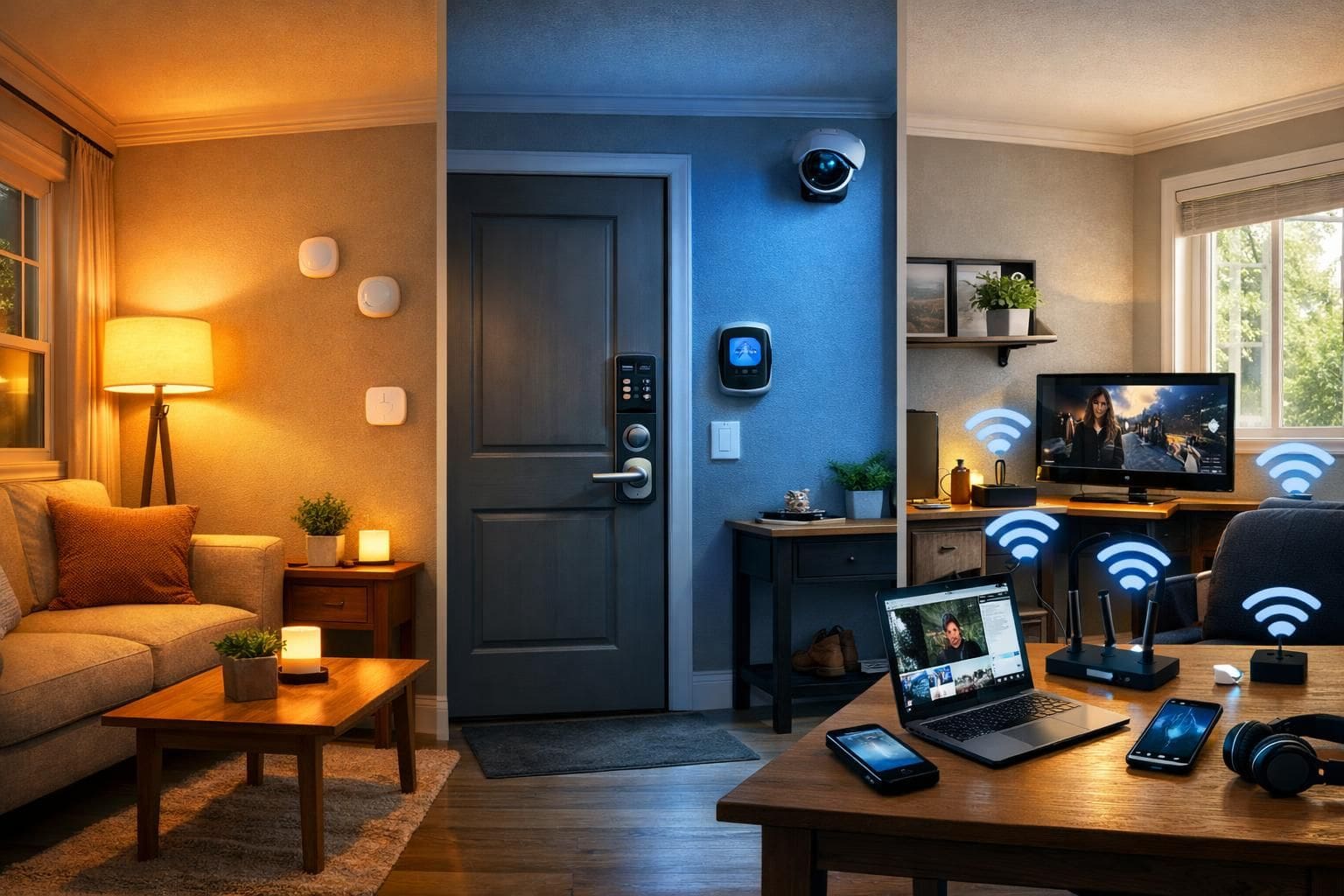
In the evolving landscape of smart home technology, selecting the optimal wireless communication protocol can significantly influence the functionality, efficiency, and reliability of an entire system. The three giants — Zigbee, Z-Wave, and Wi-Fi — each offer unique advantages and challenges, commanding attention from both novices and seasoned tech enthusiasts. Zigbee and Z-Wave specialize in low-power, mesh networking designed specifically for home automation, while Wi-Fi maintains its dominance as the ubiquitous internet medium capable of higher data rates and seamless integration with internet services. As 2025 progresses, understanding the nuanced differences and applicative suitability of these technologies is essential for designing a smart home setup that truly fits one’s lifestyle and technical needs.
Many homeowners grapple with choices between Zigbee and Z-Wave due to their shared characteristics like mesh networking, but diverge in frequencies, device interoperability, and ecosystem compatibility. Adding to this complexity is Wi-Fi’s status as an already entrenched home technology that promises high-speed connectivity but with power and reliability trade-offs. These considerations gain further depth when factoring in emerging standards like Matter, which strives to unify smart home device communication. With so many options, the question remains: which protocol stands out as the best choice?
Key Technical Differences Between Zigbee and Z-Wave for Smart Home Automation
Zigbee and Z-Wave are the primary contenders when it comes to specialized wireless protocols crafted for smart home devices. Both utilize a mesh network topology, enhancing range and robustness through device-to-device communication rather than relying solely on a central hub. However, the specifics of their operation reveal significant differences that impact performance and user experience.
Frequency Bands and Interference Considerations
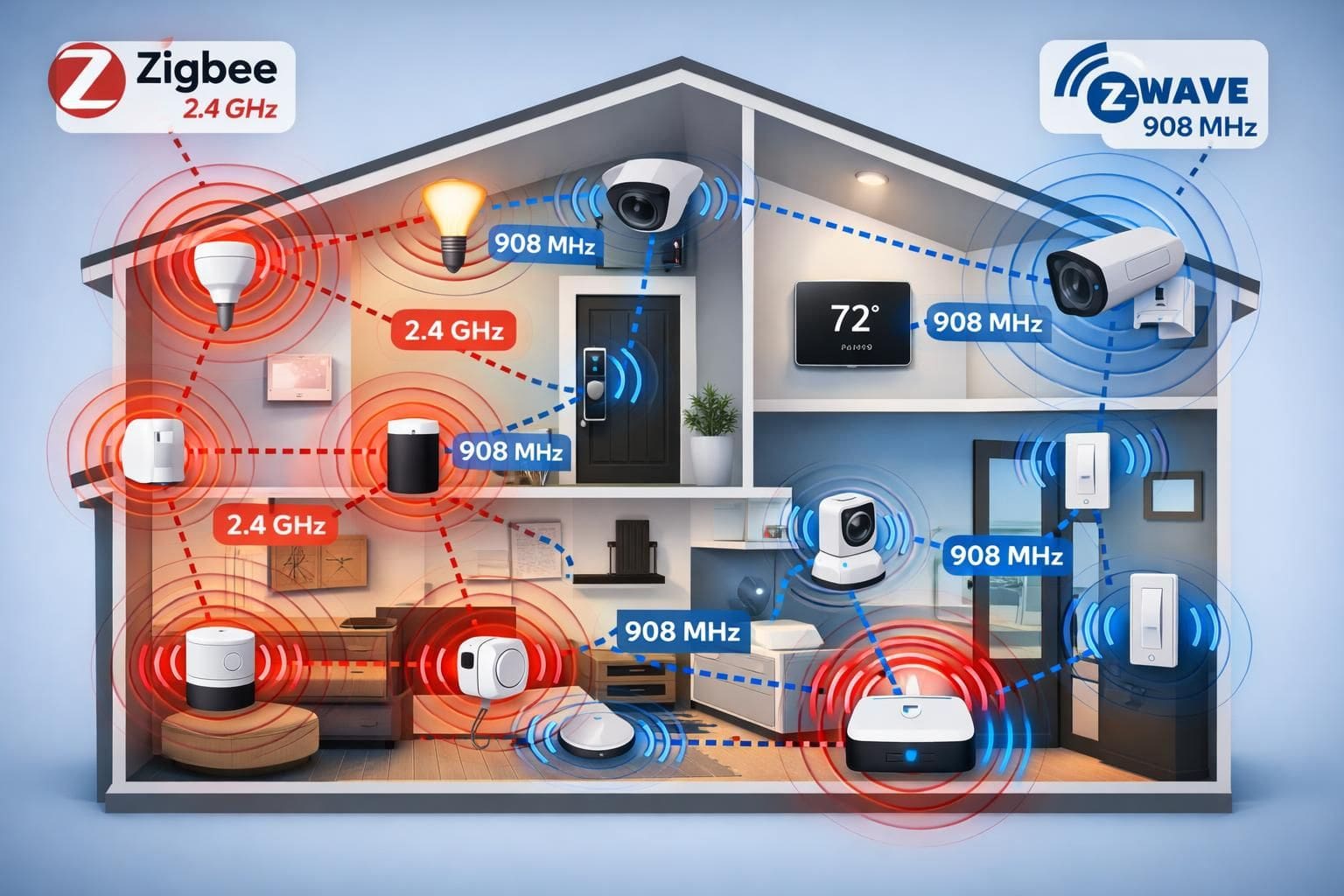
Zigbee operates predominantly on the 2.4 GHz global frequency band, aligning it with Wi-Fi and many Bluetooth devices. While this enables worldwide compatibility and simplifies the design of devices, it exposes Zigbee to potential interference from common household Wi-Fi routers and microwave ovens. Such interference can occasionally result in reduced signal quality or latency spikes in crowded wireless environments.
Conversely, Z-Wave generally functions in sub-GHz frequencies—908 MHz in the United States and 868 MHz in Europe—which grants it superior penetration through walls and other obstacles and less susceptibility to interference from Wi-Fi signals. The downside is regional frequency variation, requiring devices certified for specific local allocations, which limits universal plug-and-play capability across borders. However, this also contributes to the reliability Z-Wave enjoys in obstructed indoor environments.
Range and Network Scalability
Range-wise, Z-Wave excels with typical signals reaching 30 to 60 meters indoors, aided by its sub-GHz spectrum which supports better propagation through walls and floors. Zigbee’s 2.4 GHz signals usually span approximately 10 to 20 meters inside buildings due to higher attenuation at this frequency. Both standards benefit significantly from mesh networking, where intermediate devices act as repeaters, extending effective coverage throughout a home.
Z-Wave Long Range (LR) represents a newer enhancement, markedly increasing network coverage to several kilometers and boosting device support capacity to thousands of nodes. This evolution makes it particularly suitable for extensive properties or complex setups requiring numerous connected devices.
Bandwidth and Data Capacity
Zigbee supports data transfer rates up to 250 kbps, outpacing Z-Wave’s typical maximum of 100 kbps. Although both are significantly slower than Wi-Fi, these rates are adequate for the small data payloads characteristic of smart sensors and actuators. The higher bandwidth of Zigbee benefits devices requiring more frequent or complex data exchanges, such as those with richer sensory input.
Device Limitations and Protocol Control
Zigbee networks can theoretically support tens of thousands of devices — a figure far surpassing the roughly 232-device cap imposed on Z-Wave networks due to its « four-hop rule » limiting inter-device message propagation. This makes Zigbee attractive for large-scale installations. However, Z-Wave’s proprietary management by Silicon Labs and strict certification processes ensure hyper-tight interoperability and backward compatibility among devices, ruling out many potential integration frustrations.
Architectural and Ecosystem Impacts on Smart Home Integration
Beyond raw performance specs, the ease of integration, compatibility across vendors, and ecosystem support heavily influence protocol selection. Understanding the governance and certification nuances can help clarify practical differences affecting homeowners.
Alliance and Certification Models
Zigbee is governed by the Connectivity Standards Alliance (formerly the Zigbee Alliance) and functions as an open standard based on IEEE 802.15.4 protocols. This openness encourages broad device adoption but creates variability in device interoperability. The distinction between “Zigbee-certified” and “Zigbee-ready” products means consumers need to carefully verify device standards compliance to ensure seamless compatibility, particularly focusing on Zigbee 3.0 certification for the latest interoperability assurances.
Z-Wave remains a proprietary standard entirely controlled by the Z-Wave Alliance and Silicon Labs. Manufacturers must undergo rigorous certification and compliance testing to use Z-Wave technology, offering end users confidence in the coherent operation of devices within the Z-Wave ecosystem. This stewardship translates to superior device-to-device communication harmony and easier troubleshooting across brands and generations.
Hub Requirements and Smart Home Ecosystem Compatibility
Both Zigbee and Z-Wave typically require a central hub or gateway to bridge their respective mesh networks with the home’s internet and smart assistant platforms. Compatible hubs like Samsung SmartThings, Hubitat, or Amazon Echo devices with integrated radios often support both protocols, enabling multi-protocol networking within one household.
Wi-Fi devices differ by connecting directly to the home router without additional hubs, which simplifies setup but can congest the network when hosting numerous smart devices. The prevalence of Wi-Fi also facilitates easy integration with cloud services and voice assistants, albeit with potential drawbacks in power consumption and network stability.
Support for Emerging Standards: Matter’s Influence
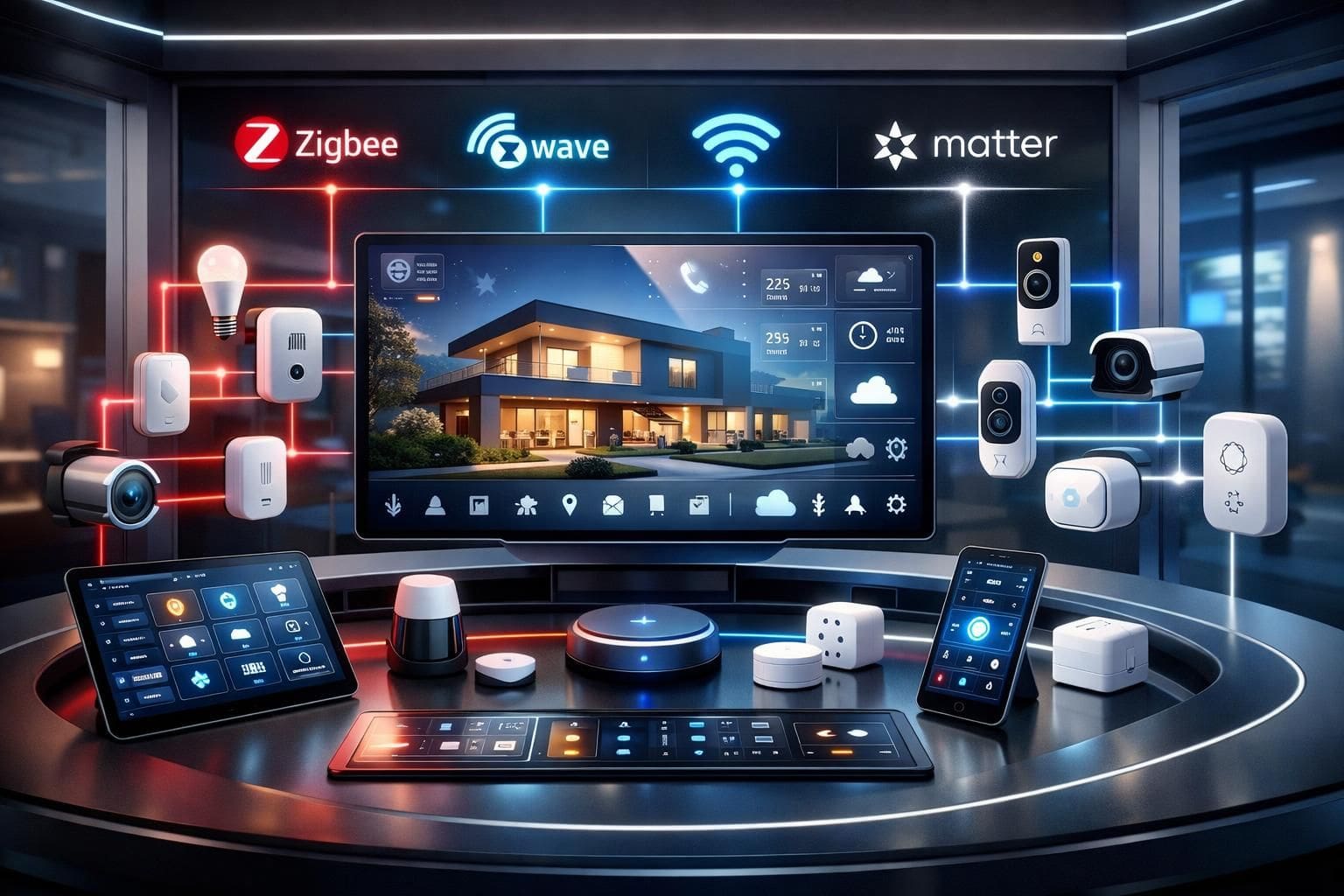
The Matter standard, backed by industry giants including Apple, Google, and Amazon, aims to unify communication across different protocols. Zigbee is a key contributor to Matter’s development, which could result in greater cross-compatibility and simplified device management in coming years, potentially reshaping current smart home architectures and easing interoperability concerns.
Comparing Reliability, Security, and Latency Across Zigbee, Z-Wave, and Wi-Fi
Performance in real-world settings encompasses more than data rates and device counts — reliability, latency, and security frameworks critically impact user experience and safety.
Network Reliability and Interference
Z-Wave’s lower frequency and strict device certification contribute to greater network stability in typical household environments, with fewer dropouts and better obstacle penetration. Zigbee networks, while agile and scalable, may encounter interference in crowded 2.4 GHz bands, particularly from co-located Wi-Fi networks, though proper channel management can mitigate this.
Wi-Fi offers the highest speeds but is prone to interference and signal congestion, especially in urban environments where multiple overlapping networks exist. Its higher power consumption and potential latency spikes can disrupt latency-sensitive applications like security sensors.
Security Implementations
Both Zigbee and Z-Wave employ strong AES-128 encryption to secure communications and protect against unauthorized access. Z-Wave’s Security 2 (S2) framework adds multiple authentication layers and uses Elliptic Curve Diffie-Hellman key exchange, enhancing defense against man-in-the-middle attacks. Zigbee similarly employs secure key establishment and device authentication to safeguard its networks.
Latency and Response Times
Latency represents the delay between command issuance and device response, key for user satisfaction in a smart home. Although Zigbee boasts higher data rates, the actual latency difference with Z-Wave tends to be negligible — often in single-digit milliseconds. Wi-Fi devices may experience variable latency depending on network traffic and interference, potentially hindering time-sensitive controls.
Cost Considerations and Device Availability in Smart Home Protocols
The financial and availability aspects of these protocols directly influence consumer decisions and adoption curves.
Device Pricing and Market Penetration
Zigbee devices generally incur lower costs than Z-Wave counterparts, owing to its open standard approach that lowers manufacturing overhead and licensing fees. This is particularly evident in entry-level smart bulbs, sensors, and plugs. Z-Wave, with its tight ecosystem and certification demands, often results in higher prices per device, especially in the lower to mid price range.
The extensive device catalog of Zigbee, especially in European and Asian markets, provides users with abundant choices, while Z-Wave’s curated device selection emphasizes interoperability and reliability. Wi-Fi smart devices are often the most affordable and widely available due to the ubiquity of the Wi-Fi chipsets and consumer familiarity.
Power Consumption and Battery Life Implications
Generally, Zigbee and Z-Wave boast significantly lower power consumption than Wi-Fi, making them the preferred standards for battery-operated sensors and devices. Innovations like Z-Wave Plus v2 and Zigbee Green Power have further narrowed differences in efficiency, allowing longer device lifespans and less frequent battery replacements, a critical factor for smart locks, thermostats, and motion sensors.
- Zigbee Green Power enables ultra-low power devices, including energy-harvesting units, supporting long-term autonomous operation.
- Z-Wave Plus v2 enhances range, security, and energy management while simplifying the device pairing process through SmartStart.
- Wi-Fi devices tend to require substantially more power, limiting their suitability for battery-powered applications.
Device Support and Ecosystem Growth
The ability to access a diverse range of devices across brands without compatibility worries remains a priority. Many modern hubs support simultaneous Zigbee and Z-Wave protocols, allowing users to mix and match devices based on performance needs. Meanwhile, Wi-Fi devices boast the most straightforward setup but can overburden home networks when used excessively.
Practical Applications and Recommendations for Choosing Between Zigbee, Z-Wave, and Wi-Fi
Each smart home communication protocol brings its own set of capabilities that align differently with varied use cases, household sizes, and user expectations.
Choosing Based on Home Size and Network Complexity
For larger homes or multi-building properties, Z-Wave Long Range offers excellent coverage with fewer repeaters. Zigbee’s theoretically vast device capacity might attract users who anticipate expansive, device-rich environments such as smart apartments or smart office complexes.
Ideal Use Cases for Each Protocol
- Zigbee: Particularly effective for smart lighting setups, given the broad availability of Zigbee-compatible bulbs and tunable fixtures, as detailed in resources like smart lighting setup for apartments. Its high data rates also support more intricate devices.
- Z-Wave: Favored in security-conscious applications such as smart locks and alarm sensors where reliability and low interference are paramount, further described in security beginner guides such as smart home security for beginners.
- Wi-Fi: Best suited for high-bandwidth devices, including cameras, streaming gadgets, and smart appliances that require easy internet access. Strategies for camera cloud storage integration are elaborated upon in advanced reviews like smart cameras cloud storage.
Hybrid Networks and the Role of Hubs
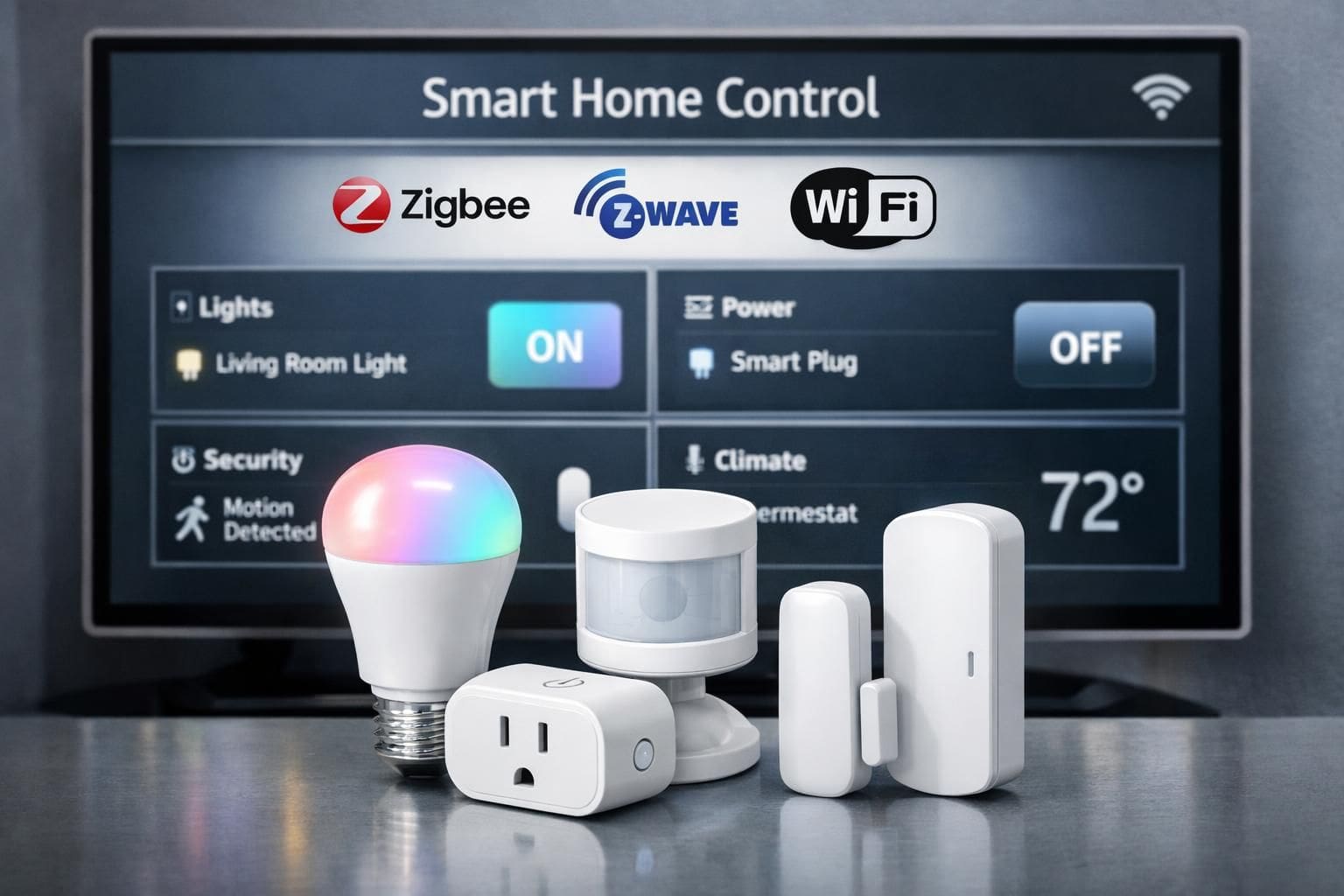
In practice, many homeowners benefit from a hybrid approach that employs Zigbee and Z-Wave alongside Wi-Fi. A unified hub capable of managing multiple protocols—refer to comprehensive explanations in smart home hubs explained—grants flexibility and scalability, mitigating the limitations inherent in relying solely on one protocol.
Such diversity enables users to optimize networks for speed, power consumption, and device compatibility simultaneously. The possibility of expanding or refining the network as new standards like Matter evolve adds further value.