

In the rapidly advancing landscape of security technology, smart cameras paired with cloud storage have emerged as pivotal tools for both residential and commercial security. With cities growing denser and security concerns intensifying, these systems offer a modern avenue to safeguard properties effectively. The marriage of high-resolution imagery, AI-powered detection, and the convenience of cloud storage seemingly provides a comprehensive, easy-to-access security solution. However, the choice between cloud storage and traditional local recording is not straightforward. Factors such as ongoing costs, data privacy, and technological reliability come into sharp focus as users weigh their options in 2025’s digital era.
Businesses operating in metropolitan hubs face unique challenges when protecting their premises, from dense pedestrian traffic to sophisticated intrusion attempts. Smart cameras with cloud storage grant the ability to monitor activities in real-time, anywhere with an internet connection, fostering rapid response to incidents. Meanwhile, homeowners find these technologies indispensable for peace of mind, with smart alerts and remote video access transforming life’s uncertainties into manageable situations. Yet, as these advantages mount, so do concerns about data security, subscription fees, and the dependence on stable internet conditions.
The Advantages of Cloud Storage for Smart Cameras: Enhanced Accessibility and Security
Cloud storage for smart cameras revolutionizes how footage is managed by transferring video data from local devices to remote servers securely maintained by the service provider. This paradigm shift presents several distinct benefits, making it highly attractive for users requiring dependable and scalable storage solutions.
One of the most compelling advantages is remote accessibility. Footage can be reviewed in real-time or retrospectively from any location via a smartphone app or web browser. This feature is especially beneficial for business managers who need to oversee multiple properties spread across cities or countries, as well as for busy homeowners wanting to check on their property while away. Unlike traditional local storage, cloud systems are immune to physical damage or theft of cameras and hard drives, enhancing the persistence of crucial evidence.
Moreover, cloud storage generally offers virtually unlimited storage capacity. Traditional setups often struggle with finite storage options limited to hard drive sizes or microSD cards. This limitation necessitates overwriting older footage to make room for new recordings, potentially erasing important data. With cloud providers, users retain extensive historical data without worrying about running out of space, aiding thorough investigations or long-term monitoring without the hassle of manual data management.
Cloud platforms also typically integrate advanced security protocols like 128-bit AES encryption to safeguard data in transit and at rest. Coupled with secure authentication mechanisms, these measures markedly reduce the risk of unauthorized access or data breaches. Many providers also offer intelligent AI-based motion detection and instant alert systems which filter genuine security incidents from false alarms, bolstering proactive response capabilities.
The software updates and maintenance factor in cloud storage further contributes to its appeal. Service providers handle firmware updates, ensuring compatibility with the latest security standards and features without the user needing to intervene. This reduces manual oversight, technical complexity, and potential vulnerabilities that arise from outdated software.
In the commercial context, cloud-based smart cameras can scale effortlessly alongside business growth. Adding cameras or increasing storage only involves modifying subscription plans, eliminating the need for additional hardware purchases or complex installations. This flexibility supports businesses adapting to fluctuating security needs as they evolve.
Overall, cloud storage fundamentally transforms the security camera experience by combining accessibility, scalability, and fortified protection. This makes it an ideal choice for users prioritizing convenience and comprehensive data security, despite some associated costs and reliance on network infrastructure.
Local Storage for Smart Cameras: Practical Benefits and Inherent Limitations
Though cloud storage is gaining momentum, local storage remains a critical consideration for many users due to its unique practical advantages. In local storage systems, the recorded footage is saved directly onto physical devices such as hard drives, network-attached storage (NAS), or microSD cards housed within or near the camera.
One of the most persuasive advantages of local storage is immediate access without the need for internet connectivity. This proves vital in environments prone to unreliable network connections or in situations where data privacy and control remain paramount. Without relying on remote servers, users can retrieve footage instantly without worrying about bandwidth limitations or network outages.
Cost effectiveness also plays a prominent role. Unlike cloud subscriptions, which require recurring monthly or annual payments, local storage often involves a one-time investment in equipment. Once purchased and installed, the user is free of ongoing fees, providing long-term savings especially appealing to cost-conscious households or small businesses with stable security requirements.
However, local storage carries significant drawbacks that impact its practicality and security. Storage capacity is inherently limited to the physical media installed, often necessitating frequent manual management to delete or archive older recordings. Failure to manage storage efficiently risks overwriting critical video files, potentially losing crucial evidence.
Furthermore, local systems are vulnerable to physical damage or tampering. Cameras or storage devices can be stolen, destroyed by environmental hazards like fire or floods, or sabotaged maliciously. Recovering footage in such scenarios becomes difficult or impossible, undermining the core purpose of surveillance.
Maintenance burdens also fall on the user. Firmware updates, hardware failures, and troubleshooting require technical knowledge or professional assistance. For users without this expertise, local storage can be a source of frustration, risking gaps in coverage or compromised system performance.
Local storage is also limited in scalability. Expanding surveillance capabilities means additional hardware purchases, physical space, and complex wiring or network configurations. This attenuates flexibility for businesses or homeowners looking to progressively enhance their security infrastructure.
Despite these shortcomings, local storage remains relevant where internet connectivity is unreliable, budgets are limited, or data sovereignty concerns dictate that footage must never leave the premises.
Subscription Costs and Privacy Considerations Associated with Cloud Storage
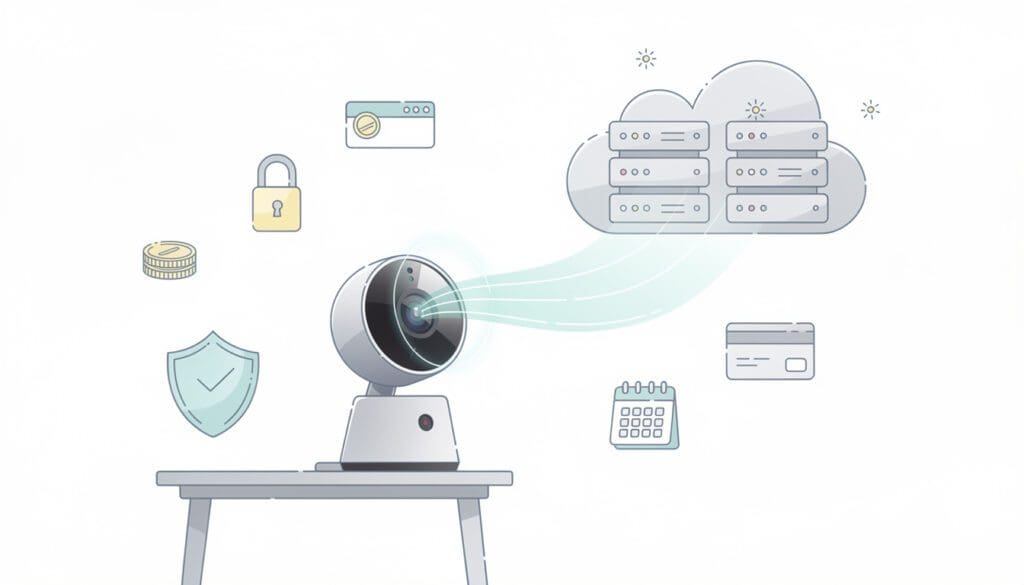
Investing in cloud storage alongside smart cameras inevitably brings up questions regarding ongoing subscription costs and the management of sensitive video data. While the convenience of cloud solutions cannot be denied, it’s vital to recognize the financial and privacy implications incumbent upon users in 2025.
Most cloud storage services operate on tiered subscription models. Typically, a basic free plan is offered with restricted capabilities such as limited video quality, shorter storage duration, or fewer advanced security features. For full HD or 2K video recordings, extended retention periods, and AI-powered analysis such as human or package detection, a paid subscription is almost always required.
Subscription fees vary significantly across providers but often range from a few dollars to $15 or more per camera monthly. Business security systems with multiple cameras can therefore incur substantial ongoing costs that must be factored into operational budgets. Despite these expenses, the value farmers, retailers, and homeowners derive from remote monitoring and quick incident response often justifies the expenditure.
Privacy concerns represent a critical consideration. Cloud storage implies that video data is hosted on third-party servers, subjecting it to vulnerabilities inherent in any networked system. Reputable providers deploy strong encryption methods and multi-factor authentication to mitigate unauthorized access risks. However, no system is impervious.
Users bear responsibility in maintaining security hygiene through strong passwords, regular system updates, and cautious sharing practices. Recent events have shown that garment factories to small businesses are targets of increasingly sophisticated cyberattacks aiming to seize or manipulate surveillance data, underscoring why diligent user behavior is essential alongside provider safeguards.
Another nuance involves data sovereignty laws, which can impact where footage is stored and the regulatory protections it is afforded depending on server locations. Organizations operating internationally must understand compliance requirements associated with cloud storage providers.
Choosing cloud storage blends benefits with responsibilities around security management. For many, the ease of access, data backup, and AI-powered security insights outweigh subscription costs and privacy trade-offs—so long as robust security protocols are actively maintained.
Technological Requirements and Network Implications for Cloud-Connected Smart Cameras
Smart cameras leveraging cloud storage impose specific technological requirements that users must consider to ensure consistent performance and reliability. These demands encompass network infrastructure, bandwidth consumption, and device compatibility.
A prerequisite for cloud storage cameras is a stable, high-speed internet connection with adequate upload bandwidth. Unlike local storage systems where footage is saved onsite, cloud systems continuously or intermittently upload substantial data to remote servers. Higher resolution footage, such as 2K or 4K, combined with continuous recording or frequent motion-triggered clips, requires significant data capacity.
In practical terms, a single 1080p camera may consume anywhere from 1 to 5 gigabytes of upload data monthly, while 2K cameras typically use even more. Households or businesses with multiple cameras often face substantial cumulative data usage, necessitating internet plans with generous or unlimited upload allowances. Failure to meet these requirements can cause dropped frames, delays in access, or failure to save crucial video segments.
WiFi compatibility constitutes another operational factor. Many cameras support both 2.4GHz and 5GHz frequency bands, each with distinct characteristics. The 2.4GHz band offers superior range and wall penetration, ideal for outdoor cameras or those far from the base router, while 5GHz provides faster, lower-latency connections optimal for high-resolution indoor footage requiring real-time alerts.
Battery life and power considerations play into camera placement strategies. While cloud cameras offer remote convenience, many rely on consistent power sources or long-lasting batteries that must be accounted for during installation planning. Solar-powered cameras or those with energy-efficient sleep modes provide innovative solutions to mitigate frequent battery swap concerns.
Additionally, device compatibility matters. Integration with smart home hubs, voice assistants like Alexa or Google Assistant, and interoperability with other smart devices enhance system utility but require users to invest time in configuration and compatibility validation. The end-user experience improves considerably when camera ecosystems are seamlessly united, allowing automation-based security routines and addressing privacy dynamically.
For users contemplating cloud storage smart cameras, confirming their network can sustain such a system without compromising performance is essential. Upgrading routers, increasing bandwidth plans, or optimizing network layouts often become necessary steps to fully leverage the potential of integrated cloud security setups.
Emerging Trends and Hybrid Solutions in Smart Camera Storage for 2025
As smart camera technology continues to advance through 2025, a notable evolution emerges from the binary choice of cloud versus local storage toward hybrid storage solutions. These systems integrate the strengths of both approaches to mitigate their inherent weaknesses.
Hybrid solutions store critical footage locally—often the last several minutes of video—for fast onsite access and minimal latency, while simultaneously uploading footage to the cloud for long-term, secure archival. This strategy provides a buffer against internet interruptions, immediate playback, and robust backup if physical devices are damaged or stolen.
This dual approach is especially attractive for commercial enterprises with complex security needs. For instance, a retail chain in Houston might use local storage to review recent footage rapidly during an incident and rely on cloud archives for comprehensive audits and investigations over extended periods.
Furthermore, hybrid systems frequently incorporate AI and machine learning technology to optimize recording preferences, such as limiting storage of irrelevant footage and focusing on motion or human detection. Users can customize settings to control what is recorded locally versus stored remotely, managing bandwidth use and subscription costs efficiently.
Another trend lies in increased emphasis on privacy-centric design. Cameras and cloud providers alike are exploring technologies that allow encrypted data streams without revealing raw footage to third parties, employing edge computing to analyze feed data locally before transmitting summaries or alerts.
Additionally, solar-powered wireless cameras coupled with cloud storage offer promising sustainable security solutions. The ability to operate indefinitely with minimal maintenance appeals strongly to environmentally conscious users and those seeking low operational overheads, providing uninterrupted surveillance even in remote locations.
Ultimately, the trajectory of smart camera storage technology points towards customizable, resilient, and secure systems that leverage the best of cloud and local storage paradigms. Users benefit from faster data access, stronger data protection, lower costs, and superior surveillance intelligence.