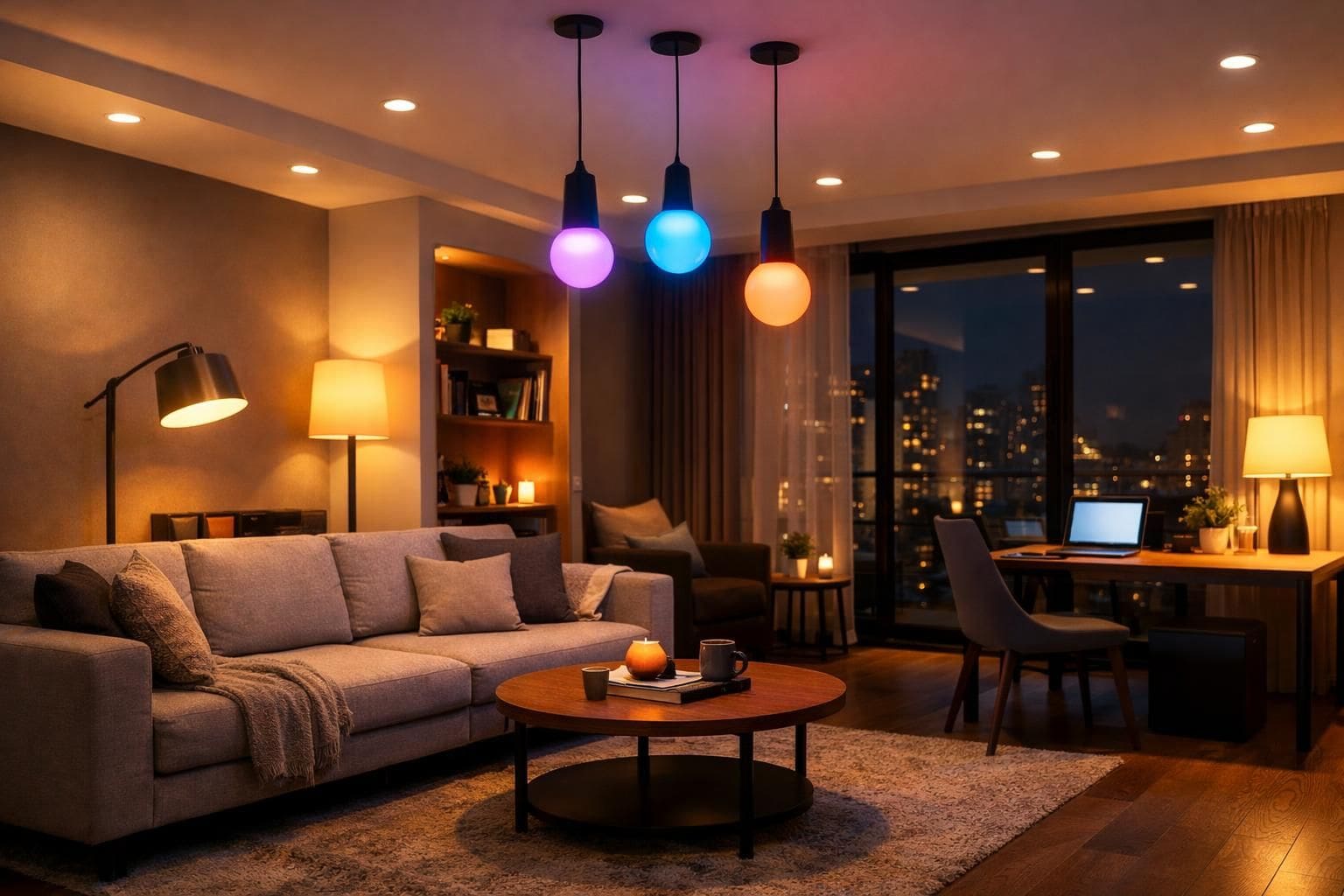
Transforming apartment living with smart lighting is more than a trend—it’s a shift towards mastering convenience, ambiance, and energy efficiency in urban spaces. With the ever-growing demand for technology-integrated homes, this lighting revolution offers residents newfound control over their environments. Imagine adjusting your lighting tone to cultivate productivity during work-from-home hours or switching effortlessly to vibrant hues that enliven social gatherings—all controlled remotely or through intuitive voice commands. These systems tap into the power of LED technology combined with wireless connectivity, enhancing not just the visual atmosphere but contributing to sustainable living by reducing energy consumption.
Smart lighting’s appeal lies in its adaptability against the constraints of apartment living: no complex wiring changes are necessary, making it an accessible and renter-friendly upgrade. By creating distinct lighting zones—bedroom, living room, kitchen—tenants curate atmospheres tailored to daily rhythms, supported by automation like motion sensors and programmable routines. Integrations with popular voice assistants such as Alexa or Google Assistant elevate hands-free operation, while remote access empowers adjustments anytime, even when away from home, increasing both convenience and security. This powerful combination invites a seamless experience where everyday lighting becomes not only functional but a powerful tool for wellness and style.
Essential Components for a Smart Lighting Setup in Apartments
Building an effective smart lighting system in an apartment starts with understanding the core devices that enable control and customization. Smart bulbs are the cornerstone, offering color-changing LEDs that support dimming and preset scenes for tailored ambiance. These bulbs connect wirelessly, often via Wi-Fi or Zigbee, without requiring a hub, although hubs can enhance performance when integrating multiple devices from different brands.
Smart switches replace traditional toggles, giving centralized control while allowing manual use compatible with the new technology. For renters hesitant about permanent modifications, smart plugs convert ordinary lamps into smart devices, offering flexibility without altering fixtures. Additionally, motion sensors automate lighting responses to movement, improving energy efficiency by ensuring lights are only on when needed.
Choosing the Right Smart Bulbs to Match Your Lifestyle
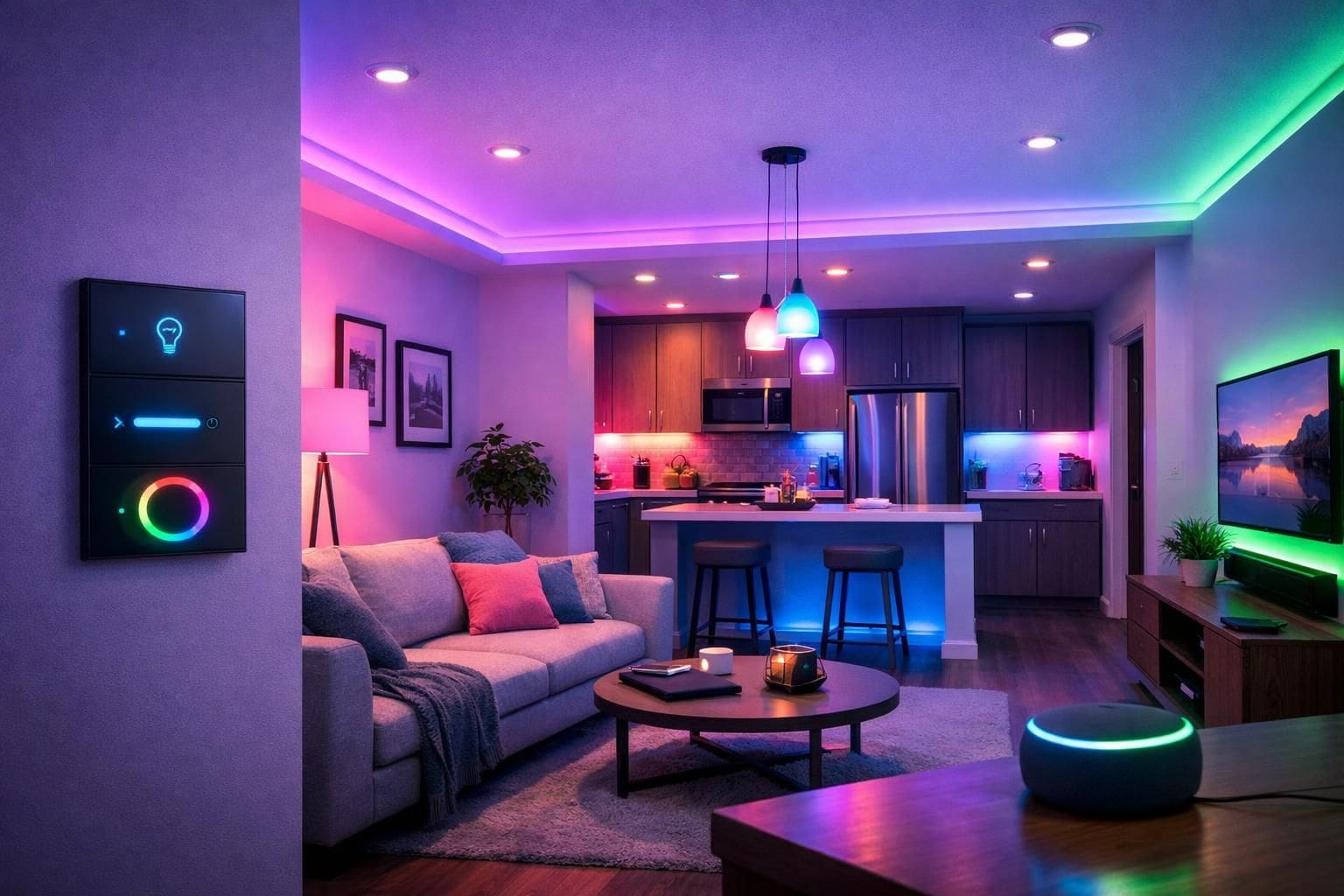
Opting for the perfect smart bulbs requires balancing functionality and lifestyle preferences. LED bulbs remain the best choice for energy conservation and longevity, ensuring your setup is both cost-effective and sustainable. Color temperature adjustment lets users shift from cool white for alertness during the day to warm tones ideal for evening relaxation. For those who love personalization, bulbs with vibrant color ranges allow for creative expression, transforming spaces to match moods and occasions.
Compatibility is paramount; ensuring your bulbs work seamlessly with your smart home ecosystem avoids frustrating interruptions. For example, Philips Hue, Nanoleaf, and Wyze offer diverse options in connectivity and features, ranging from DIY installations to advanced integrations with multiple smart devices.
Simple Steps to Install Smart Lighting Components in Your Apartment
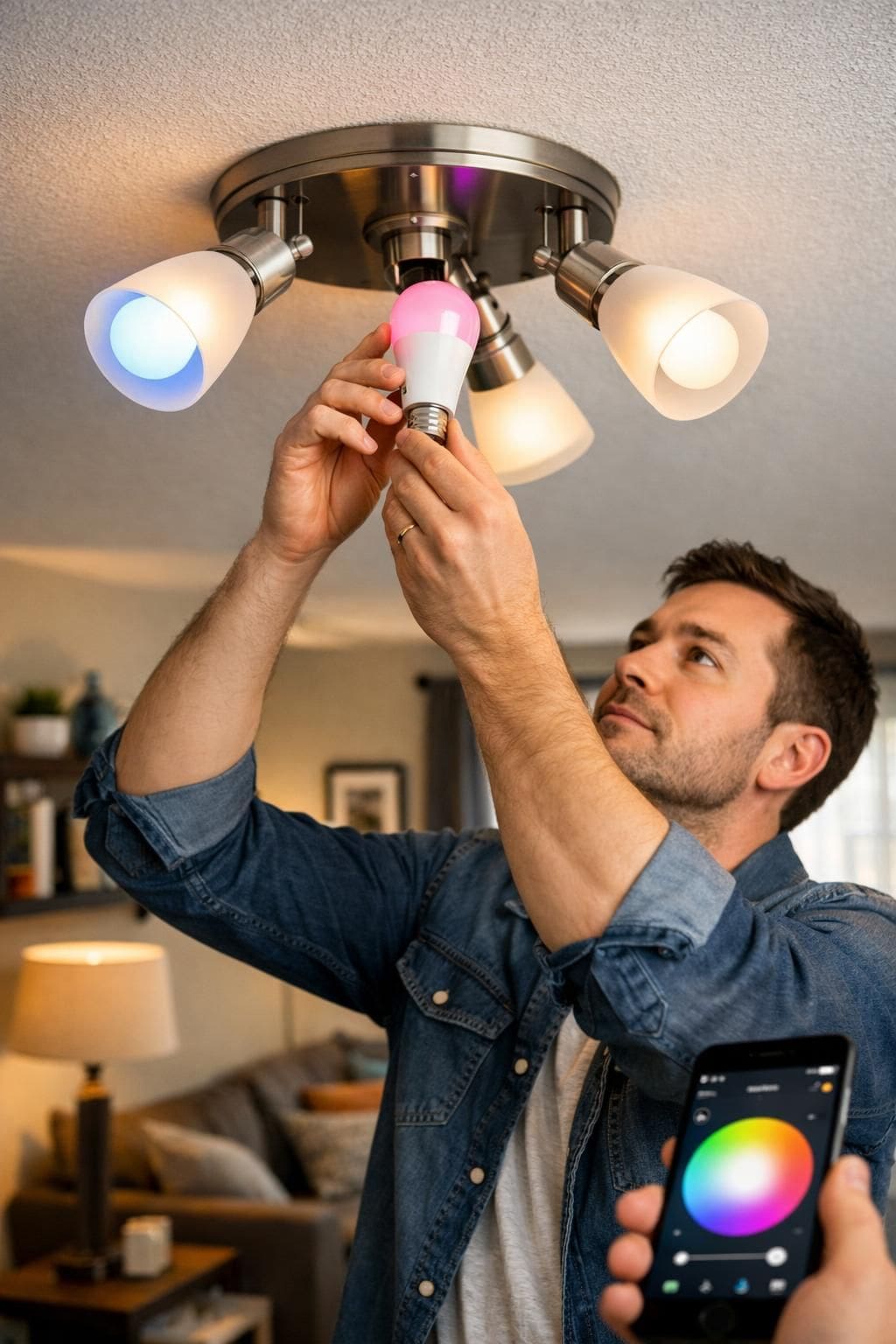
Installation is straightforward and renter-friendly, requiring no electrical rewiring, making it accessible for nearly anyone. Begin by safely replacing existing bulbs with smart versions, ensuring power is off during the swap. Once installed, reconnect power and use the accompanying smartphone app to link bulbs to your Wi-Fi network, setting up control profiles and schedules.
When adding smart switches, it’s essential to verify wiring compatibility. Many models offer easy installation guides, with some designed for renters featuring non-invasive mounting options. For hubs, placement in a central area boosts connection quality among all devices, creating a resilient lighting network. Always test each device post-installation to confirm responsiveness, making adjustments as necessary before enjoying full control.
Automation and Integration—Taking Smart Lighting Beyond Basics
Unlocking the true potential of smart lighting means embracing automation. Use schedules to mirror natural daylight patterns, helping regulate circadian rhythms and enhancing sleep quality. Motion sensors serve as energy savers by turning lights on only when rooms are occupied. Smart plugs extend automation to traditional lamps, controlled remotely or synced with routines.
Voice control integration offers effortless interaction—commands like “dim the living room lights” or “turn all lights off” reduce friction in daily routines. Centralizing device management through smart home hubs lets residents unify lighting with other smart gadgets, like thermostats or security cameras, orchestrating scenes that enhance comfort and safety simultaneously.
Effective Troubleshooting Tips for Smart Lighting Systems
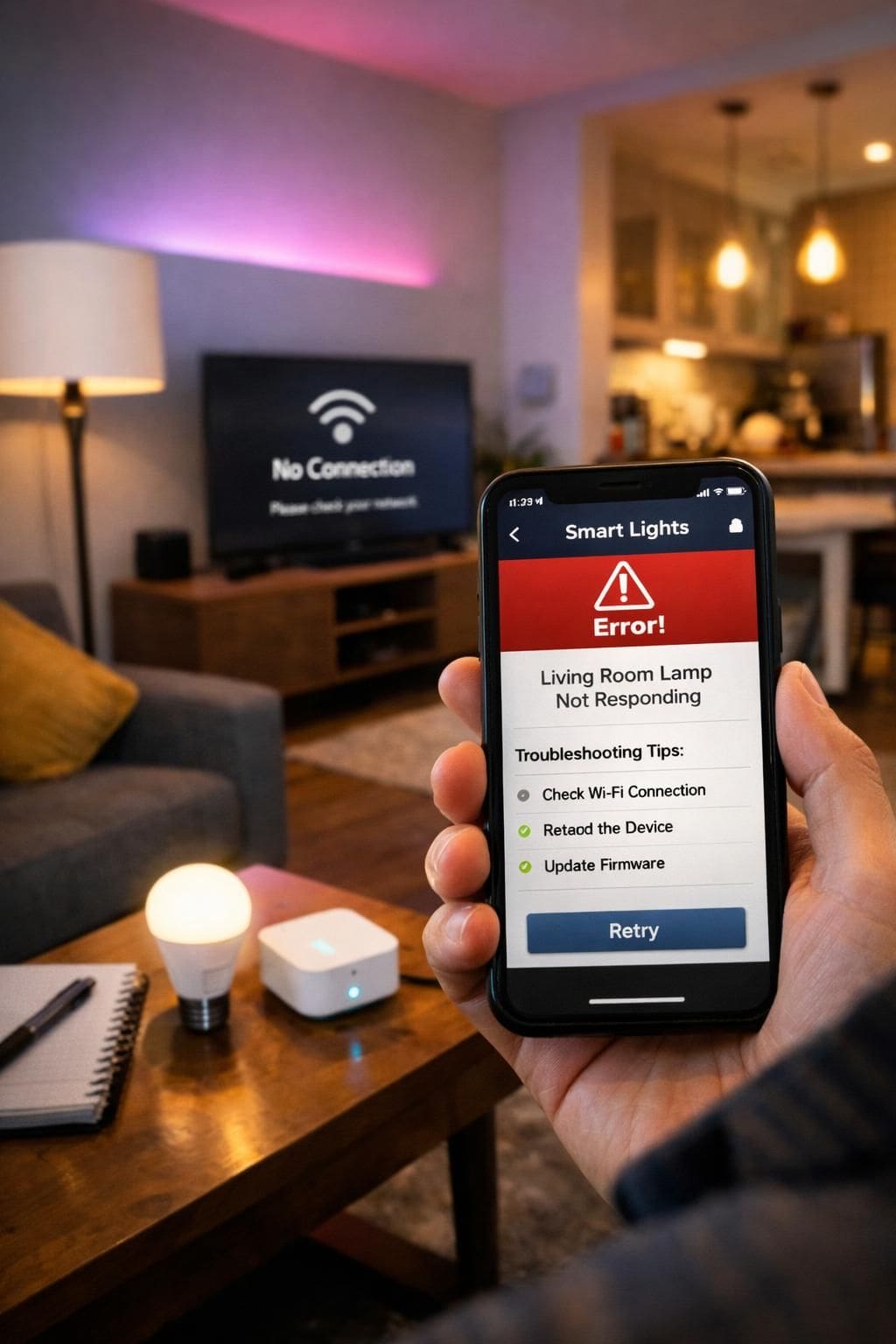
While smart lighting systems are designed to offer seamless experiences, occasional glitches can occur. Start troubleshooting by confirming bulbs are securely screwed in and powered on. Network connectivity issues may arise, so ensure your Wi-Fi signal is strong; reboot routers if needed.
Regularly updating the lighting system’s firmware enhances compatibility and fixes bugs. If a bulb remains unresponsive, a factory reset following manufacturer instructions often restores functionality. Keep in mind, interference from nearby electronics can disrupt wireless signals, so place hubs and devices away from potential sources like microwaves or cordless phones.
- Verify power supply and switch status
- Ensure stable Wi-Fi connectivity
- Update device firmware to the latest version
- Reset unresponsive devices according to guidelines
- Minimize interference by relocating hubs and sensors
- Contact customer support for persistent or complex issues