
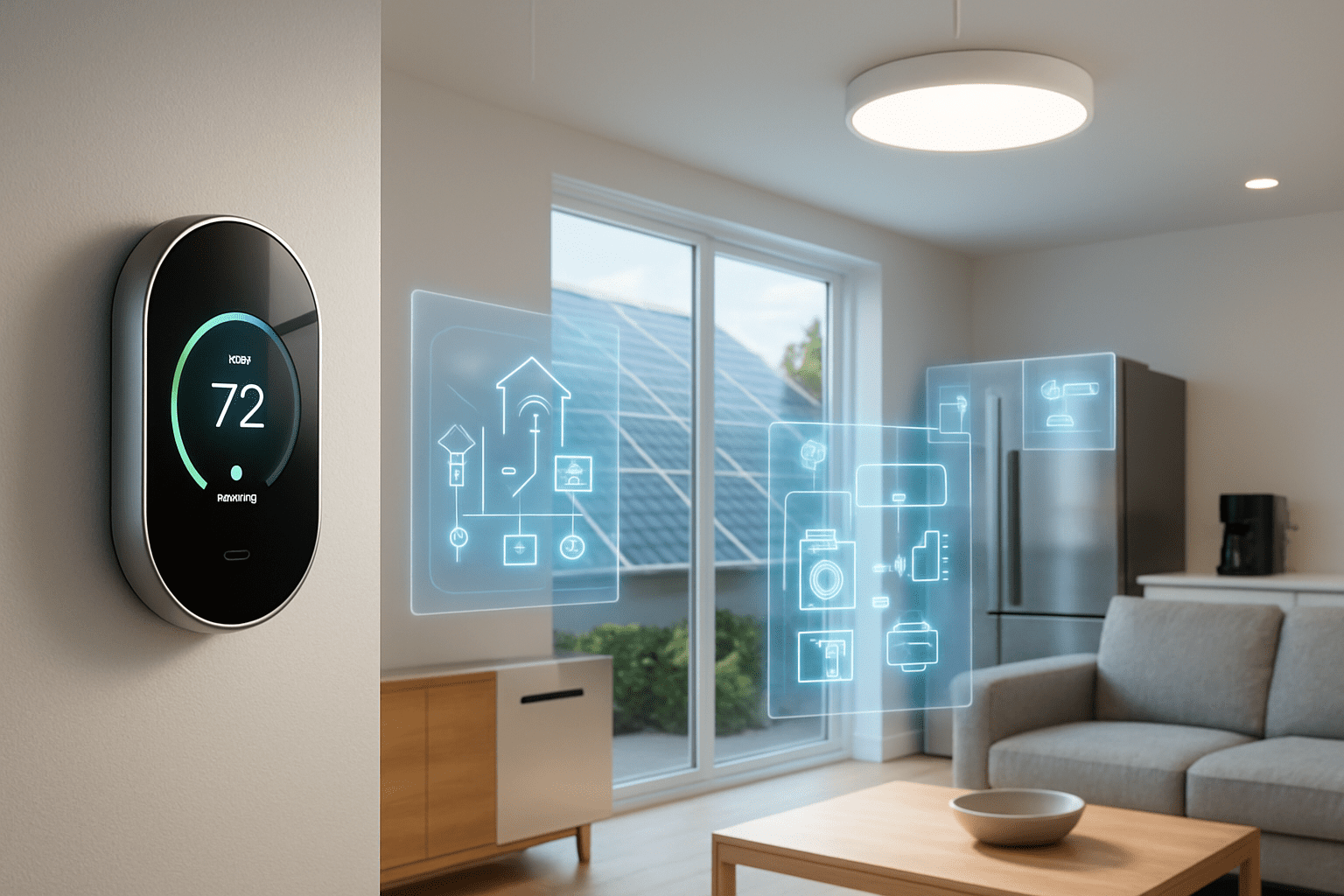
Energy-saving devices have moved from niche gadgets to essential household tools. With energy prices climbing and climate commitments tightening, homes are being redesigned around smart, efficient technologies that quietly trim waste throughout the day. From learning thermostats to intelligent water systems, these devices use sensors, automation, and data to cut consumption without sacrificing comfort. For many households, the shift is driven as much by monthly bills as by environmental concerns, and the most successful products are those that deliver on both fronts.
Behind this transition, a subtle culture change is taking place. Instead of reacting to high bills once a year, people now monitor usage in real time, get alerts when something goes wrong, and fine‑tune their routines with a level of precision that used to be reserved for industrial facilities. A fictional but very typical example is the Patel family, who live in a mid-sized suburban home. By layering a few well-chosen energy-saving devices into their normal routine—smart thermostat, LED lighting, connected power strips, and a water monitor—they manage to reduce their electricity and gas usage by nearly a quarter while actually increasing their comfort. Their story mirrors a broader trend: homes that quietly think alongside their occupants, turning energy efficiency into a default rather than a chore.
Top Trends in Energy-Saving Devices in 2025
The most striking change in energy-saving devices in 2025 is the way intelligence is now embedded in almost every product category. Devices are no longer just “on” or “off”; they anticipate patterns, learn from behavior, and react to external data such as local weather and electricity tariffs. This shift is powered by inexpensive sensors, cloud connectivity, and lightweight AI models that run on-device or at the edge, keeping latency and data usage low. As a result, even relatively simple gadgets—like a light bulb or a plug—behave like miniature energy managers.
A major trend is the convergence of health, convenience, and sustainability. Energy-saving features are increasingly bundled with comfort and wellness functions. An air purifier might ramp down when indoor air quality is good, saving power, while also syncing with a smart thermostat to maintain a healthy temperature and humidity for sleep. The Patel family’s home illustrates this: their living room lights dim automatically at night, not only reducing kWh use but also guiding their winding-down routine, which has benefits beyond the electricity bill.
Another key evolution is the emphasis on whole-home visibility. Instead of guessing where energy goes, people now use monitors and dashboards that break usage down by room, time of day, and device type. Real-time analytics highlight anomalies—like a freezer that suddenly starts drawing more power—which in the past might have gone unnoticed for months. This level of insight encourages micro-adjustments: nudging the thermostat a degree lower, shifting laundry to off-peak hours, or replacing the worst-performing appliance first.
Several high-impact trends define the 2025 landscape:
- AI-driven automation that self-optimizes heating, cooling, and lighting based on learned preferences.
- Deeper integration with smart assistants, making voice commands and routines a central part of energy management.
- Demand-response capabilities, where devices react to utility price signals by reducing or shifting loads.
- Better interoperability through common standards, allowing devices from different brands to coordinate.
- Focus on ROI, with products clearly communicating estimated yearly savings and payback periods.
These trends mean that homeowners no longer need to be technical experts. Once devices are installed and a few preferences are set, the system quietly optimizes itself. This sets the stage for the core categories of energy-saving hardware now reshaping modern homes.
Smart Thermostats and HVAC Optimization for Energy Savings
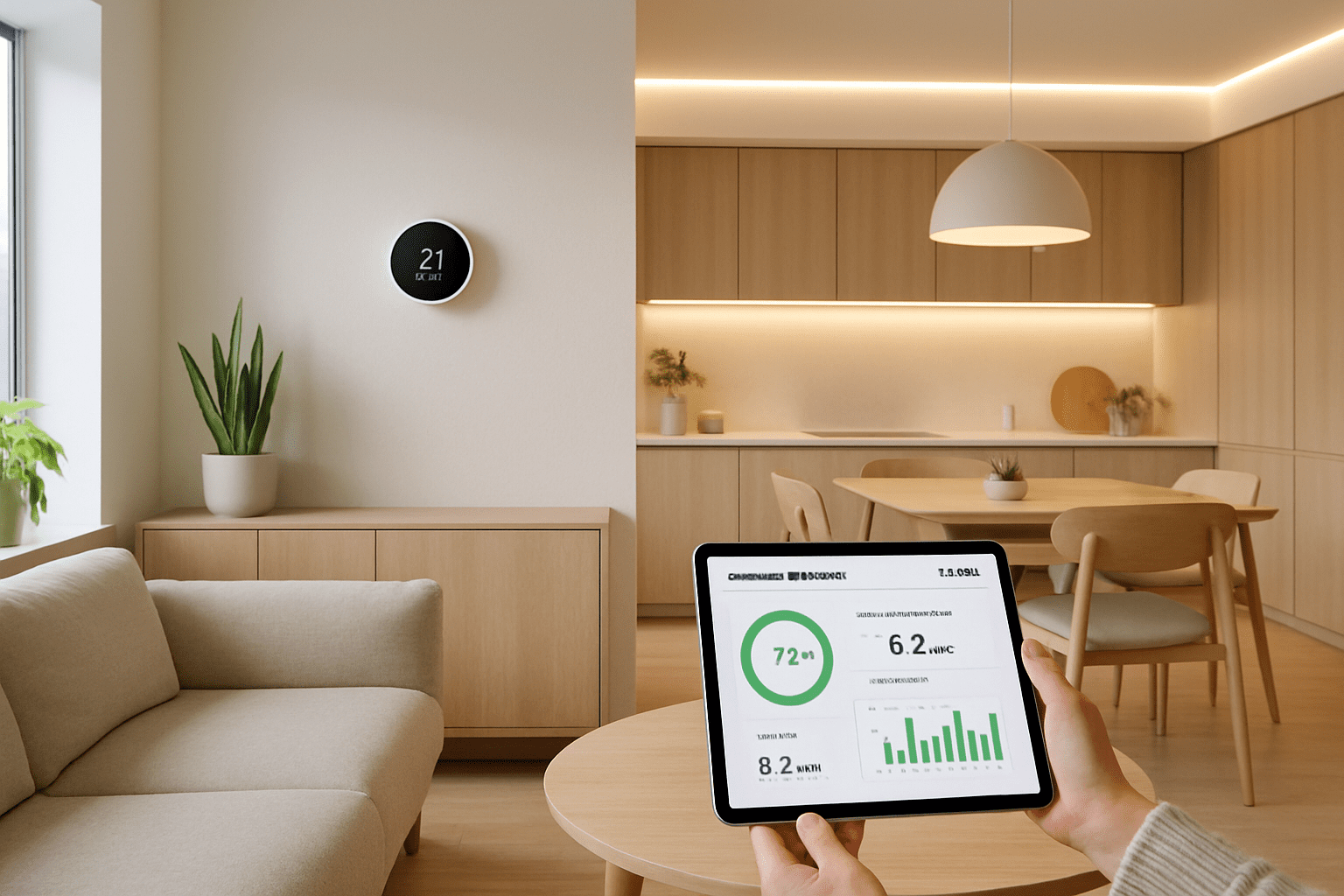
Heating and cooling typically represent the largest slice of a home’s energy use, which makes smart thermostats and HVAC optimization some of the most powerful tools among energy-saving devices in 2025. These thermostats are far more than digital dials. They learn schedules, detect occupancy, pull in weather forecasts, and collaborate with sensors in multiple rooms to maintain comfort with the minimum required energy.
Modern models like learning thermostats and premium sensor-based systems build a profile of the household within a couple of weeks. They note when residents usually leave, when they return, and which rooms are used at different times. Over time, the system automatically creates a heating and cooling schedule that avoids running the system hard when no one is home. The Patel family, for example, used to leave the heating on all day in winter. After installing a learning thermostat with room sensors, the system preheats the home before arrival, drops the temperature when the house is empty, and focuses on the rooms that are actually in use.
Several core capabilities set these devices apart:
- Occupancy detection via motion sensors and sometimes smartphone geolocation to reduce heating/cooling in empty spaces.
- Weather-aware control, using forecast data to pre-cool or pre-heat in a more efficient way.
- Zone-based management, especially when paired with smart vents or extra sensors, so unused rooms are not conditioned unnecessarily.
- Energy reports that show how much has been saved compared to a baseline or previous seasons.
- Remote access via apps, allowing quick adjustments from work or while traveling.
HVAC optimization now also includes accessories such as smart vents and room sensors. In a two-story home, the upstairs might get uncomfortably warm while the downstairs remains cool. Smart vents can redirect airflow, while sensors inform the thermostat which rooms should dictate the temperature decisions. This type of zoning was once reserved for high-end custom systems; now it’s within reach of typical households.
Financially, the payback is often straightforward. Many families see savings in the range of 10–20% on heating and cooling costs after installing a capable thermostat and enabling smart schedules. Combined with incentives from utilities or local programs, the initial purchase often pays for itself within a couple of years. For the Patels, the winter gas bill dropped enough that the thermostat effectively “paid itself off” in under two heating seasons.
Because HVAC is so dominant in residential energy use, optimizing it creates a strong foundation. Once that foundation is in place, attention naturally shifts to other everyday loads such as lighting and appliances, which bring additional opportunities for savings.
LED Smart Lighting and Automated Controls in 2025
Lighting is one of the easiest entry points into energy-saving devices in 2025. Traditional incandescent bulbs, and even older compact fluorescents, are rapidly being replaced by LED smart lighting systems that use a fraction of the power while adding flexible control and ambiance. LEDs typically consume up to 80% less electricity than incandescent bulbs, and when paired with automation, the real-world savings can be substantial.
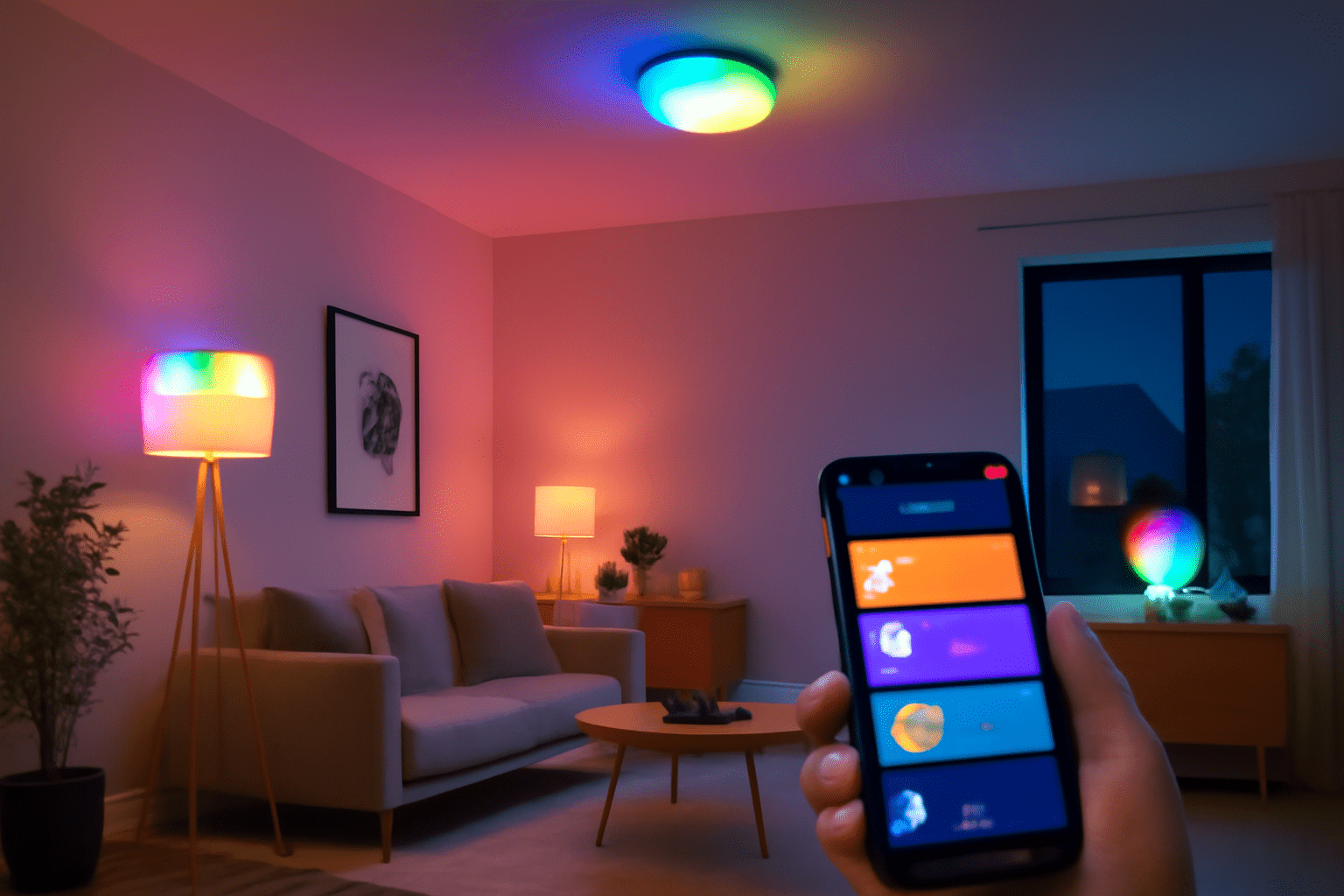
Smart bulbs and switches connect to home networks and can be grouped by room or activity. Residents can dim lights, change color temperature, or switch off entire zones with a single command or a preconfigured routine. The Patel family uses a scene labeled “Out of the house” that turns off all main lights, dims porch lighting to an efficient level, and ensures no forgotten lamp continues to drain power during the day.
The current generation of smart lighting brings several practical advantages:
- Scheduling and routines so lights follow predictable patterns, like dimming in the evening or turning off after bedtime.
- Presence simulation for security, where lights mimic occupancy while using efficient LEDs.
- Motion-based operation in corridors, bathrooms, and utility spaces, ensuring lights only run when needed.
- Adaptive brightness that adjusts based on ambient light from windows, reducing unnecessary use during the day.
- Energy monitoring features in some ecosystems, providing usage estimates per bulb or group.
In kitchens and workspaces, tuneable white LED bulbs can shift from cooler daylight tones during active hours to warmer, softer light at night. This not only saves energy by default but can also support healthier daily rhythms. Meanwhile, in children’s rooms, smart bulbs double as nightlights on extremely low power settings, using just a trickle of electricity compared to traditional lamps.
Costs have dropped significantly. Entry-level systems are now accessible to renters as well as homeowners, and many don’t require rewiring—simply replacing the bulb is enough. For the Patels, starting with a small starter kit in the kitchen and living room provided a clear demonstration of benefits. Once they saw their usage reports, they gradually added more bulbs and a couple of smart switches to cover high-use areas like hallways and the basement.
Lighting may not rival HVAC in total kWh, but it is a category where behavior tends to be wasteful—forgotten lights in empty rooms, bright bulbs where softer ones would suffice, and lamps left on for security. Turning this into a managed, automated system closes a longstanding efficiency gap and paves the way to tackling “hidden” loads such as standby appliances and phantom power.
Smart Plugs, Power Strips, and Water Management Devices
Beyond the obvious systems, some of the most effective energy-saving devices in 2025 focus on the quiet, constant trickle of electricity and water that often goes unnoticed. These are the “energy vampires” and slow leaks that add up on monthly bills. Smart plugs, advanced power strips, and intelligent water devices directly target these overlooked areas.
Smart plugs and power strips sit between the outlet and ordinary appliances—TVs, game consoles, coffee machines, chargers. They measure consumption, allow remote control, and can automatically cut power when devices are idle. For instance, the Patel family plugged their entertainment center into a smart power strip that shuts down accessories when the TV is off. This eliminated standby draw from the soundbar, game console, and streaming box, several of which previously consumed power around the clock.
The core capabilities of these devices include:
- Remote on/off control via apps or voice assistants, useful for rarely used equipment.
- Schedules and timers to ensure devices don’t run longer than necessary.
- Idle detection, which turns outlets off when no active load is detected.
- Energy usage statistics for each connected plug, highlighting candidates for replacement or better management.
- Surge protection in some strips, combining safety with efficiency.
On the water side, smart water heaters and water monitors tackle another major cost center. Water heating can represent a sizable portion of household energy use. Connected water heaters let users schedule heating during off-peak hours, adjust setpoints remotely, and receive alerts if performance deviates from normal. Smart monitors attached to the main supply line detect leaks, unusual patterns, and even identify specific end uses such as showers, irrigation, or washing machines.
For the Patels, installing a water monitor exposed a slow, barely audible leak in an outdoor faucet. Left undetected, it would have wasted thousands of liters of water and the gas needed to heat a portion of it. The system’s alerts prompted a quick fix. In parallel, scheduling the water heater to prioritize morning and evening use, while allowing the tank to rest at a slightly lower temperature mid-day, shaved a noticeable portion off their combined energy and water bill.
These devices appeal especially to methodical homeowners who like to see cause and effect. Identifying the top five wasteful appliances via plug-level data and addressing them one by one brings immediate, quantifiable progress. Once small, scattered loads are under control, the house begins to function as a coordinated system rather than a collection of independent, always-on machines.
Home Energy Monitors and Building a Connected Efficiency Ecosystem
While individual products deliver meaningful savings, the greatest impact comes when energy-saving devices in 2025 are connected into a coherent ecosystem. Home energy monitors serve as the central nervous system, gathering data from the electrical panel and often from sub-meters or integrated devices. They translate raw usage into understandable insights: which appliances draw the most power, how usage spikes over the day, and where unexpected patterns suggest waste.
Modern monitors use a combination of current sensors and machine learning to recognize the unique electrical “signatures” of common devices—refrigerators, HVAC compressors, dishwashers, and more. Over time, they build up a map of what is running in the home at any given moment. For the Patel family, viewing this breakdown on a smartphone dashboard was eye-opening. They were surprised to see how often a rarely used spare-room heater turned on due to a misconfigured thermostat, quietly pushing up winter bills.
Key benefits of a connected monitoring system include:
- Device-level visibility without needing a separate plug for each appliance.
- Alerts for anomalies, such as continuous operation of a pump or unexpected overnight spikes.
- Goal tracking, enabling households to set monthly targets and see progress.
- Integration with automation, where high-usage events can trigger actions in thermostats, plugs, or lighting.
- Support for time-of-use optimization, helping shift flexible loads to cheaper tariff periods.
Once a monitor is installed, the home can be thought of as a constantly measured system. Routines become data-driven. If a new appliance significantly increases baseline consumption, it’s immediately apparent, prompting evaluation of settings or even a replacement with a more efficient model. Similarly, if energy use drops after a change—like sealing drafts or upgrading insulation—that improvement is visible in the graphs, reinforcing good decisions.
Beyond electricity, some ecosystems also tie in gas and water metering, creating a single pane of glass for all household utilities. This makes trade-offs more transparent. For example, switching from long, hot showers to shorter, slightly cooler ones not only reduces water use but also lowers gas or electricity demand for heating, doubling the impact.
In the Patel home, the combination of an energy monitor, smart thermostat, connected lighting, and managed plugs led to an integrated experience. A “Goodnight” routine turns off non-essential loads, checks doors and windows via sensors, lowers the thermostat setpoint, and logs the house into a low-consumption state. When they check their monthly dashboards, they see the cumulative effect of countless small, automated decisions stacking up into a sizable reduction in overall usage.
This ecosystem approach is where residential efficiency is heading: a home that quietly optimizes itself, guided by clearly presented data and a few well-chosen preferences.
Which energy-saving device should be installed first for the biggest impact?
For most homes, a smart thermostat is the best first step because heating and cooling usually account for the largest share of energy use. Once that is optimized, adding LED smart lighting and a few smart plugs delivers easy additional savings.
Can renters benefit from energy-saving devices in 2025?
Yes. Renters can focus on portable, non-invasive devices such as smart bulbs, smart plugs, and energy monitors that clamp onto the electrical panel without rewiring where permitted. These can be removed when moving to a new place.
How much money can a typical household save with smart energy devices?
Savings vary, but many households see reductions of 10–30% on their energy bills when they combine a smart thermostat, efficient lighting, managed plugs, and basic leak or water monitoring. The exact amount depends on home size, climate, and previous habits.
Do energy-saving devices require constant manual adjustment?
No. Modern devices rely heavily on automation. After initial setup and a short learning period, they mostly run in the background, occasionally asking for confirmation of suggested changes or new routines.
Are these devices compatible with popular voice assistants?
Most current energy-saving devices integrate with major platforms such as Alexa, Google Assistant, and other smart home ecosystems. Checking compatibility before purchase ensures they can be controlled together through routines and voice commands.