
Smart plugs sit quietly in wall outlets, yet they have a real talent for reshaping everyday life at home. These small adapters turn ordinary lamps, fans, heaters, and even coffee makers into connected devices that can be controlled from a phone or with a quick voice command. For families juggling busy schedules, students sharing an apartment, or anyone trying to cut rising electricity bills, a smart plug can be the easiest entry point into the world of automation and energy awareness.
Behind their simple appearance, smart plugs offer a powerful mix of remote control, scheduling, and energy monitoring. A basic lamp becomes a security tool that mimics presence while the owners are away. An old space heater can be made safer by shutting it off automatically at night. Parents can quietly enforce screen-time limits by cutting power to a game console at bedtime. In homes where every kilowatt-hour counts, smart plugs help reveal hidden power hogs and show, in clear numbers, how much each appliance really costs to run. With prices dropping and compatibility expanding across Alexa, Google Home, and Apple’s ecosystem, these compact devices are turning “smart home” from a buzzword into something approachable, helpful, and surprisingly fun to use.
Smart Plugs Explained: What They Are And How They Work
A smart plug is a compact device that fits between a power outlet and the plug of an appliance, giving digital control over the flow of electricity. Instead of walking across the room to flip a switch, users tap a button in an app or speak to a voice assistant, and the smart plug cuts or restores power instantly. This simple on–off function is the foundation for more advanced features like routines, timers, and energy insights.
Most smart plugs rely on a wireless connection to talk to phones, tablets, or smart speakers. Some models use the home’s existing Wi‑Fi network, while others communicate via protocols such as Zigbee or Z‑Wave, forming a “mesh” of devices that pass signals among themselves. In the latter case, a central hub or bridge often coordinates everything, acting as the traffic controller for lights, plugs, sensors, and other accessories around the home.
Once connected, a companion app becomes the control center. It usually shows a list of devices with clear names like “Desk Lamp” or “Air Purifier” and offers buttons for turning them on or off. Many apps also provide automation options so that the smart plug responds to time, sunrise or sunset, or even whether the phone has left the neighborhood. This ability to connect everyday outlets to the digital world is what makes smart plugs such a versatile gateway into home automation.
Key traits that define a modern smart plug include:
- Wireless connectivity (Wi‑Fi, Zigbee, or Z‑Wave) for communication with apps and hubs.
- Remote on/off control from anywhere with an internet connection.
- Automation features such as timers, schedules, and scenes.
- Energy monitoring on many models to track electricity use.
- Voice assistant integration with Alexa, Google Assistant, Siri, and similar platforms.
To see how this works in practice, imagine a student named Alex moving into a small city apartment. The building is old, the outlets are limited, and the heating system is uneven. By plugging a portable heater, a desk lamp, and a fan into three different smart plugs, Alex can control the room’s comfort with a phone from bed or the couch. When leaving for class, a single tap checks that the heater is off, reducing the risk of accidents and making the apartment safer.
The basic installation process is usually straightforward. The user plugs the smart plug into a wall socket, downloads the manufacturer’s app, and follows on-screen steps to add the device to the home network. Once named and assigned to a room, the plug becomes part of the digital map of the home, ready to respond to routines like “Goodnight,” “Movie time,” or “Study mode.”
Under the surface, the smart plug constantly listens for commands and, in many cases, records data about how much power is passing through. That information is later turned into graphs and numbers inside the app, helping the household understand exactly how each device behaves. Thanks to this mix of connectivity, control, and data, a small rectangle of plastic can act as a surprising upgrade for older, “dumb” appliances.
This technical backbone sets the stage for the real magic: what smart plugs actually do day to day and how they quietly change routines at home.
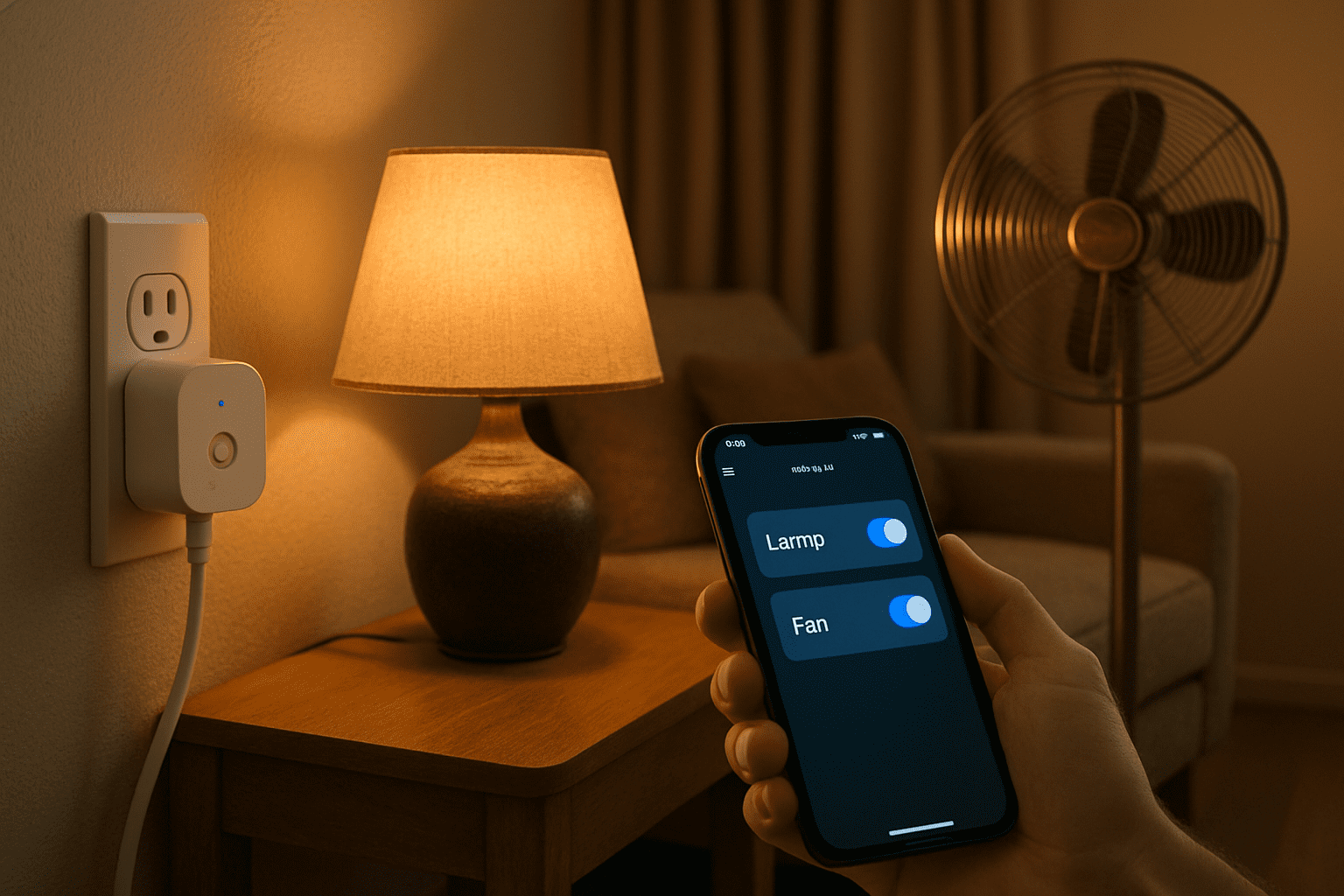
Core Functions Of Smart Plugs: Control, Scheduling, And Monitoring
Once a smart plug is installed, its most visible talent is simple: on-demand control. A lamp, fan, or kettle that used to rely on a physical switch now responds instantly to an app or voice assistant. This turns everyday actions into quick, low-effort gestures and solves real problems, especially for people with mobility challenges or busy hands full of groceries or children.
The first pillar is remote access. With an internet connection, it becomes possible to check on devices from almost anywhere. Not sure if the iron was turned off before leaving for work? Open the app, look at the status, and cut the power if necessary. This eases the common anxiety of “Did I remember to turn that off?” and prevents small mistakes from turning into costly or dangerous situations.
The second pillar is scheduling, which quietly removes repetitive tasks from daily life. Instead of remembering to switch the porch light on at dusk and off before bed, a schedule handles it automatically. A smart plug can:
- Turn lights on at sunset and off at a set time for both convenience and security.
- Start a coffee maker 10 minutes before an alarm goes off on weekdays.
- Run a dehumidifier during low-cost electricity hours only.
- Cycle a fan during the hottest afternoon hours in summer.
For a fictional family like the Parkers, who manage school schedules, commuting, and after-school activities, these automations act like a silent helper. The hallway lamp lights up before anyone gets home, the aquarium pump cycles on reliably, and holiday lights follow a festive schedule without anyone having to fiddle with timers each evening.
The third pillar is consumption monitoring, available on many mid-range and premium models. Inside the smart plug, a small sensor measures how much power flows through to the connected appliance and records both the current draw (in watts) and the total energy used over time (in kilowatt-hours). The app then translates that into clear graphs and, often, cost estimates based on the local electricity rate.
This data becomes valuable when deciding how to cut waste. It might reveal that:
- A seemingly modest space heater is responsible for a big slice of the winter bill.
- A gaming console left in standby mode all day quietly draws power.
- An older fridge in the garage uses far more energy than expected and is worth replacing.
- Several chargers and adapters continue to consume power even when no devices are attached.
For anyone trying to be more environmentally responsible or simply trim costs, this visibility transforms abstract numbers on a bill into specific actions, like unplugging an inefficient device or changing when certain appliances run. Smart plugs function as small, targeted tools in a larger energy strategy, focusing attention exactly where it matters.
Finally, smart plugs support scenes and routines that link several devices together. A “Relax” scene might dim lamps, turn on a salt lamp, and start a diffuser via three separate smart plugs. A “Study” routine could activate a desk lamp and a white-noise machine while shutting off distracting decorative lights. These combinations bring a sense of theater and intention to everyday moments, making rooms adapt to the activity instead of the other way around.
By mixing remote control, timing, monitoring, and scenes, smart plugs take the basic idea of an outlet and transform it into an active, responsive part of the home’s rhythm.
Real-Life Ways To Use Smart Plugs At Home
The true charm of smart plugs appears in everyday situations where they gently solve annoyances, encourage good habits, and even enhance safety. Instead of introducing complicated gadgets, they upgrade familiar household items that people already know and love. This keeps the learning curve low while the benefits feel immediate and practical.
In the living room, a smart plug linked to a floor lamp can create a warm welcome whenever someone arrives home after dark. Coupled with a schedule set to sunset, it eliminates the routine of fumbling for switches with arms full of bags. Another plug can control a media console, allowing the TV, soundbar, and streaming box to cut power fully overnight, avoiding hidden standby consumption.
In the bedroom, a plug for a bedside lamp or dim light strip makes relaxing routines smoother. A timer can slowly wind down lights at night to signal that it is time to sleep, which is especially helpful for children who resist bedtime. For light sleepers, a small fan or white-noise machine on a smart plug can run only during a fixed sleep window, shutting off automatically in the morning.
Key household uses that many people find valuable include:
- Morning routines: Turn on lamps, start a kettle, and power an espresso machine before anyone leaves bed.
- Security lighting: Simulate presence by switching lights on and off at varied times when the home is empty.
- Climate comfort: Run fans, heaters, or dehumidifiers only when needed or when electricity is less expensive.
- Pet care: Automate feeders, pumps, or lights for aquariums and terrariums.
- Study spaces: Create distraction-free zones by cutting power to consoles during homework hours.
Consider a shared student apartment. Several roommates have different class schedules, but they share a small heater and a set of string lights in the common area. With smart plugs, they agree on a schedule so the heater runs only during cold evenings when someone is likely around, while the lights turn off automatically at midnight. No one has to nag others about forgetting to switch things off, and they all enjoy a lower bill.
In the kitchen, smart plugs provide both convenience and peace of mind. A slow cooker scheduled to start at midday can have dinner ready just as the family returns home. A coffee maker begins brewing just before the alarm on weekdays, while staying off on weekends to allow for a slower morning. For safety, hot appliances like toasters, kettles, or sandwich presses can be cut off completely from a distance if someone suspects they were left on.
Smart plugs are also powerful in seasonal scenarios. Holiday lights can follow festive patterns automatically, turning on as neighbors begin their evening walks and turning off later at night. During heatwaves, a plug can trigger a portable AC unit only during the hottest window of the afternoon to support central cooling without constant operation.
These everyday examples show how a small amount of automation can reduce mental load: fewer things to remember, fewer arguments about lights left on, and more consistent routines that support sleep, study, and relaxation. Over time, the home begins to feel like a place that quietly cooperates with its occupants.
Once these simple wins are in place, many people start wondering how smart plugs can tie into broader goals such as cutting energy use, managing costs, and making more sustainable choices.
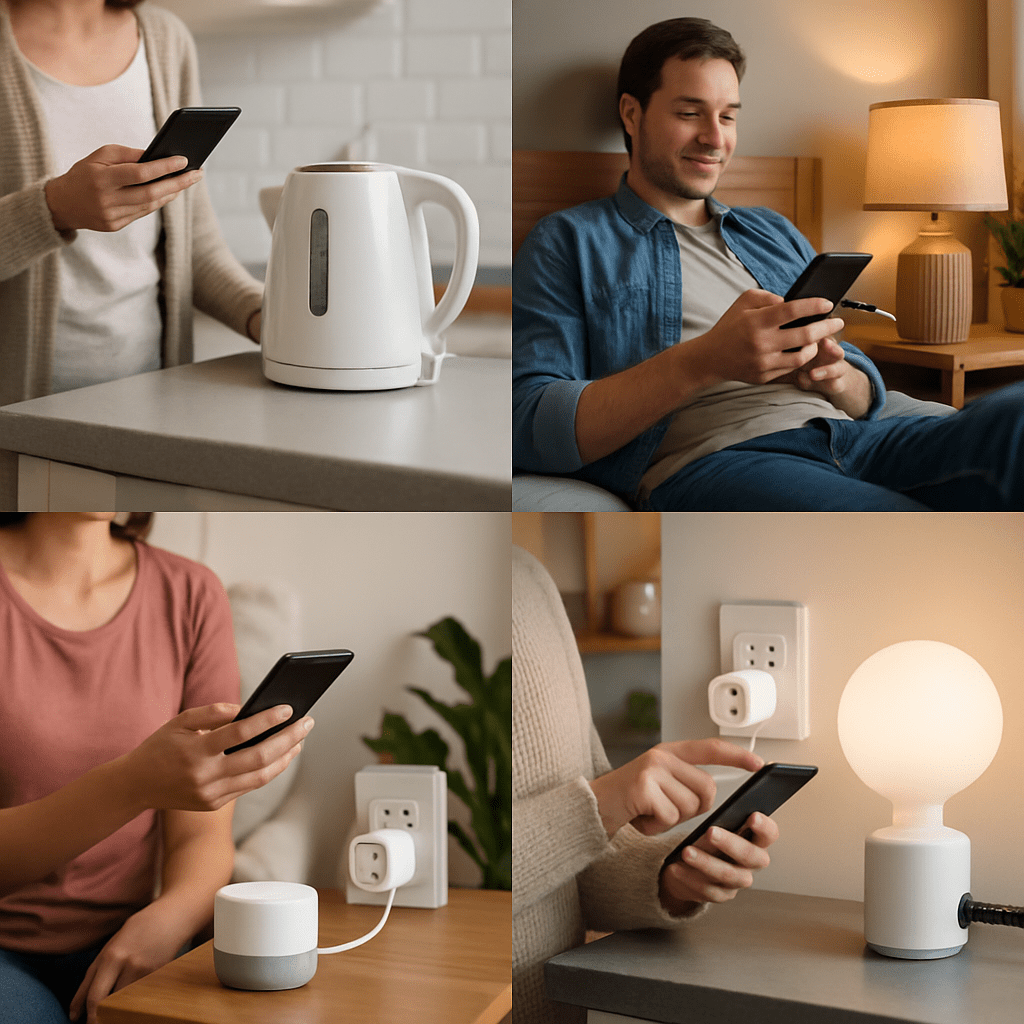
Why Smart Plugs Matter For Energy Management And Cost Savings
As electricity prices fluctuate and more households think seriously about efficiency, smart plugs have emerged as a simple but meaningful tool for energy management. Instead of relying on a vague sense that “the bill is too high,” they reveal exactly which devices are responsible and empower targeted changes. This turns saving energy from guesswork into a clear, measurable process.
Devices with energy monitoring show both real-time power draw and total consumption over days, weeks, or months. Seeing a graph that spikes every time a particular heater turns on makes it easy to connect behavior with cost. When the app adds up usage and multiplies it by the local tariff, it becomes clear how much that heater, dehumidifier, or older refrigerator truly costs per month.
Smart plugs contribute to lower bills and better awareness in several ways:
- Cutting standby power from electronics that quietly draw energy when “off.”
- Optimizing run times for high-consumption devices like heaters and dehumidifiers.
- Shifting usage of flexible loads to off-peak or cheaper tariff periods.
- Identifying inefficiencies such as aging appliances that are more expensive to run than to replace.
Imagine a homeowner who pairs three major appliances—a portable AC, a dehumidifier, and a space heater—with smart plugs that track energy use. Over one month, the app reveals that the heater alone consumes nearly as much electricity as the other two combined. Armed with this knowledge, the homeowner adjusts the thermostat, shortens the heater’s operating window, and adds a schedule so it never runs at night. The next bill shows a noticeable drop, clearly tied to those adjustments.
For households that later invest in solar panels or storage batteries, smart plugs become part of a larger strategy. They allow flexible loads to run when solar production is high, maximizing self-consumption of clean energy instead of drawing from the grid. They can also reduce draw during times when the home is running on battery, stretching stored energy further without sacrificing comfort.
Smart plugs play a complementary role alongside whole-home energy monitors. While a central system tracks every circuit at once, plugs offer granular insight at the individual device level. They are far cheaper than retrofitting the entire electrical panel, which makes them a sensible starting point for renters, students, or anyone testing the waters before committing to a full home energy management platform.
This targeted focus is especially valuable for:
- High-use appliances like heaters, portable AC units, and large dehumidifiers.
- Old but beloved devices such as vintage fridges or stereo systems.
- Equipment in remote spaces like garages, attics, or sheds that are easy to forget.
- Short-term experiments to compare different habits or devices.
By turning abstract kilowatt-hours into specific lamps, fans, and machines, smart plugs make energy management feel practical and accessible rather than technical or overwhelming. For many homes, this visibility is exactly what is needed to inspire long-term, sustainable habits and smarter choices about future purchases.
With the cost and environmental sides covered, the next step is choosing the right plug and using it safely as part of a reliable, secure smart home setup.
Choosing The Right Smart Plug And Using It Safely
The market for smart plugs has grown rapidly, with options from big brands and smaller specialists alike. While most share a core set of features, the best choice depends on where and how the plug will be used. A careful look at compatibility, power capacity, and safety helps ensure a smooth experience and protects both devices and occupants.
First, there is the question of connectivity. Many plugs use Wi‑Fi and connect directly to the home network, which keeps setup simple and avoids extra hardware. Others use Zigbee or Z‑Wave and rely on a hub or gateway, often bundled with broader smart home ecosystems. Choosing between these involves weighing:
- Wi‑Fi plugs: Easy to set up, good for small numbers of devices, may crowd busy networks.
- Zigbee/Z‑Wave plugs: Excellent for larger, integrated systems, often more stable at scale.
Next is assistant and platform compatibility. Many people want voice control through speakers they already own, so it is wise to confirm whether the plug supports Alexa, Google Assistant, Apple Home, or a preferred automation platform. This makes it possible to say things like “Turn off the living room lamp” or fold smart plugs into routines triggered by a single phrase.
Another key factor is physical design and power rating. Some plugs are compact and designed not to block adjacent sockets, making them ideal for tight spaces behind furniture. Others are more robust and rated for higher loads, suitable for devices like heaters or dehumidifiers. Checking the maximum current and wattage on the product label and comparing it to the connected appliance is essential. Overloading a plug is never worth the risk.
For safe and effective use, households should keep a few guidelines in mind:
- Match the plug’s rating to the appliance’s power needs and avoid daisy-chaining power strips.
- Use outdoor-rated plugs for garden lights or patio outlets exposed to moisture.
- Keep firmware updated to patch security vulnerabilities and improve reliability.
- Secure the home network with strong passwords and, when possible, separate guest networks.
Cybersecurity is another part of modern smart home life. A smart plug, like any connected device, should come from a reputable manufacturer that maintains software updates and handles data responsibly. Reading privacy policies may not be exciting, but it helps clarify what information is collected—such as usage patterns—and how it is used. Many people prefer brands that minimize data collection or allow clear opt-out options.
Consider a renter in a small flat who wants to control a space heater and a decorative lamp. They choose a compact Wi‑Fi plug for the lamp and a higher-rated, safety-certified model with energy monitoring for the heater. By labeling both in the app and grouping them into a “Cozy Evening” routine, they gain convenience while still respecting safety guidelines. Regularly checking that the plugs remain cool to the touch and updating the app whenever prompted rounds out a responsible approach.
Smart plugs rarely fail when chosen and used correctly, but building good habits from the start ensures that automation remains a benefit rather than a risk. Combining thoughtful selection, attention to ratings, and a few basic security steps creates a foundation on which the rest of the smart home can grow confidently.
That growth often feels most exciting when smart plugs are woven into broader smart home systems, interacting with lights, sensors, and routines to create an environment that feels genuinely responsive.
Can any device be used with a smart plug?
Most plug-in devices that simply turn on when they receive power work well with smart plugs, such as lamps, fans, heaters, and coffee makers. However, appliances that require manual buttons or touch controls to start, like some microwaves or washing machines, may not respond properly when a smart plug turns power on. It is best to test each device and always avoid exceeding the plug’s power rating, especially with high-draw equipment.
Do smart plugs use a lot of electricity themselves?
Smart plugs do consume a small amount of electricity to stay connected, typically just a few watts. For most households, this overhead is minimal compared to the savings gained by better control and reduced standby power from connected devices. Energy-monitoring models even show their own tiny consumption, which helps put the impact into perspective.
Are smart plugs safe for space heaters?
Smart plugs can be used with space heaters if the plug is specifically rated for the heater’s power draw and meets relevant safety certifications. It is crucial to check both the wattage of the heater and the maximum rating of the plug. Users should also avoid covering the heater, ensure good ventilation, and set reasonable schedules to prevent it from running unsupervised for long periods.
Can smart plugs work without Wi‑Fi?
Some smart plugs that use Zigbee or Z‑Wave can continue to respond to local commands from a hub, even if internet access is temporarily unavailable. However, most Wi‑Fi-only models need a working local network and internet connection for remote control through a phone when away from home. Basic on–off control via the physical button on the plug still works regardless.
How many smart plugs should a beginner start with?
Starting with two to four smart plugs is often ideal for beginners. This small number is enough to automate key items like a lamp, a fan, and perhaps a coffee maker or dehumidifier, without overwhelming the user or the network. After becoming comfortable with the app, schedules, and routines, it becomes easier to decide where additional plugs will provide the most value.